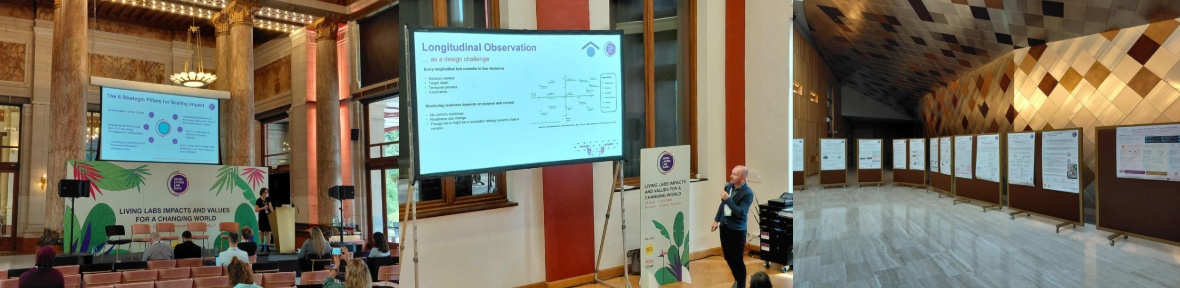
TRANS-SAHARA and the AgroScope Cluster at OpenLivingLab Days 2026
From 29 September to 2 October 2026, TRANS-SAHARA participated in OpenLivingLab Days 2026 in Belgium, and joined Living Lab practitioners, researchers, policymakers, innovators and organisations from around the world to exchange experiences and explore how Living Labs can create meaningful and lasting impact.
Organised by the European Network of Living Labs (ENoLL), OpenLivingLab Days is the organisation’s flagship annual event and provides an international platform for sharing knowledge, methodologies and practical experiences related to Living Labs and open innovation. This year’s theme, “Living Labs Impacts and Values for a Changing World,” focused on the tangible value created by Living Labs for communities, industries and policymakers, while examining how principles such as openness, collaboration, inclusivity and co-creation can support innovation in a rapidly changing social, environmental and economic landscape.
For TRANS-SAHARA, these discussions are particularly relevant. Living Labs are at the heart of our project’s approach to operationalising the Water–Energy–Food–Ecosystems (WEFE) Nexus.
From Living Labs to European policy
OpenLivingLab Days kicked off on September 29th in the heart of Brussels with the policy event “The Impact and Future of Living Labs for European Policies,” hosted at the European Committee of the Regions.
The session provided a high-level exchange between representatives of European institutions and the Living Lab community and explored in depth how real-world experimentation and co-creation can contribute to more effective, inclusive and evidence-based European policies. The discussions examined how Living Labs can support European priorities relating to competitiveness, innovation uptake and major societal challenges, while also looking ahead to the future Multiannual Financial Framework and European funding programmes.
This event was particularly timely for TRANS-SAHARA following the project’s own Science–Policy Dialogue held in Brussels earlier in 2026. A central objective of TRANS-SAHARA is to ensure that knowledge emerging from its Living Labs does not remain confined to individual demonstration sites, but can contribute to wider discussions surrounding sustainable agriculture.

Showcasing the AgroScope Cluster in Antwerp
Following the Brussels policy event, OpenLivingLab Days continued in Antwerp on 30 September and 1 October with panel discussions, workshops, research presentations and opportunities for networking and exchange.
Throughout the conference, TRANS-SAHARA exhibited alongside its sister projects GALILEO and AfroGrow as part of the AgroScope Cluster.
The three projects share a strong focus on agroforestry, Living Labs, climate resilience and sustainable land management across Africa. The joint exhibition provided an opportunity to showcase the complementary work taking place across the projects while introducing visitors to the different Living Labs, approaches and innovations being developed.
Over the two days, the AgroScope Cluster booth also served as a space for discussions with researchers, Living Lab practitioners and other EU-funded projects. These exchanges offered opportunities to identify potential synergies, share experiences and consider how collaboration between projects can help strengthen the wider impact of research and innovation activities.
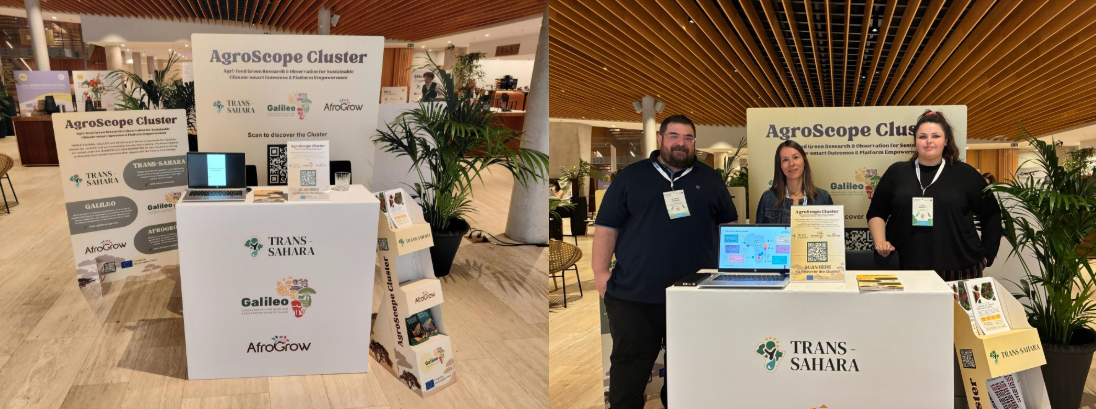
In conclusion, OpenLivingLab Days 2026 provided both an opportunity to showcase the work of TRANS-SAHARA and the wider AgroScope Cluster and a valuable space to learn from the experiences of the international Living Lab community.
We would like to thank ENoLL and the organisers of OpenLivingLab Days 2026, as well as everyone who visited the AgroScope Cluster booth and exchanged ideas with the TRANS-SAHARA, GALILEO and AfroGrow teams.
As TRANS-SAHARA continues its work across the Greater North African region, these exchanges will contribute to our ongoing efforts to move from local experimentation towards scalable, inclusive and sustainable solutions for water and land management, agroforestry and climate resilience.