On 30 June 2026, the TRANS-SAHARA team participated in the inaugural Mission Soil Investment Forum in Brussels, Belgium, an event organised by the European Commission as part of the Horizon Europe Mission “A Soil Deal for Europe.” The forum convened policymakers, investors, researchers, businesses, financial institutions, philanthropies, and practitioners to explore how innovative business models and financing mechanisms can accelerate the transition towards healthy soils across Europe.
Healthy soils underpin food production, biodiversity, climate resilience, water regulation, and sustainable rural and urban development. In recognition of the urgent need to reverse soil degradation while supporting Europe’s climate ambitions, the Mission Soil Investment Forum focused on creating stronger market conditions for investment in soil health. The discussions and sessions centred on developing scalable business models, mobilising public and private finance, and strengthening collaboration between research, policy, and industry to support the Horizon Europe Mission’s objective of establishing 100 Living Labs and Lighthouses by 2030.
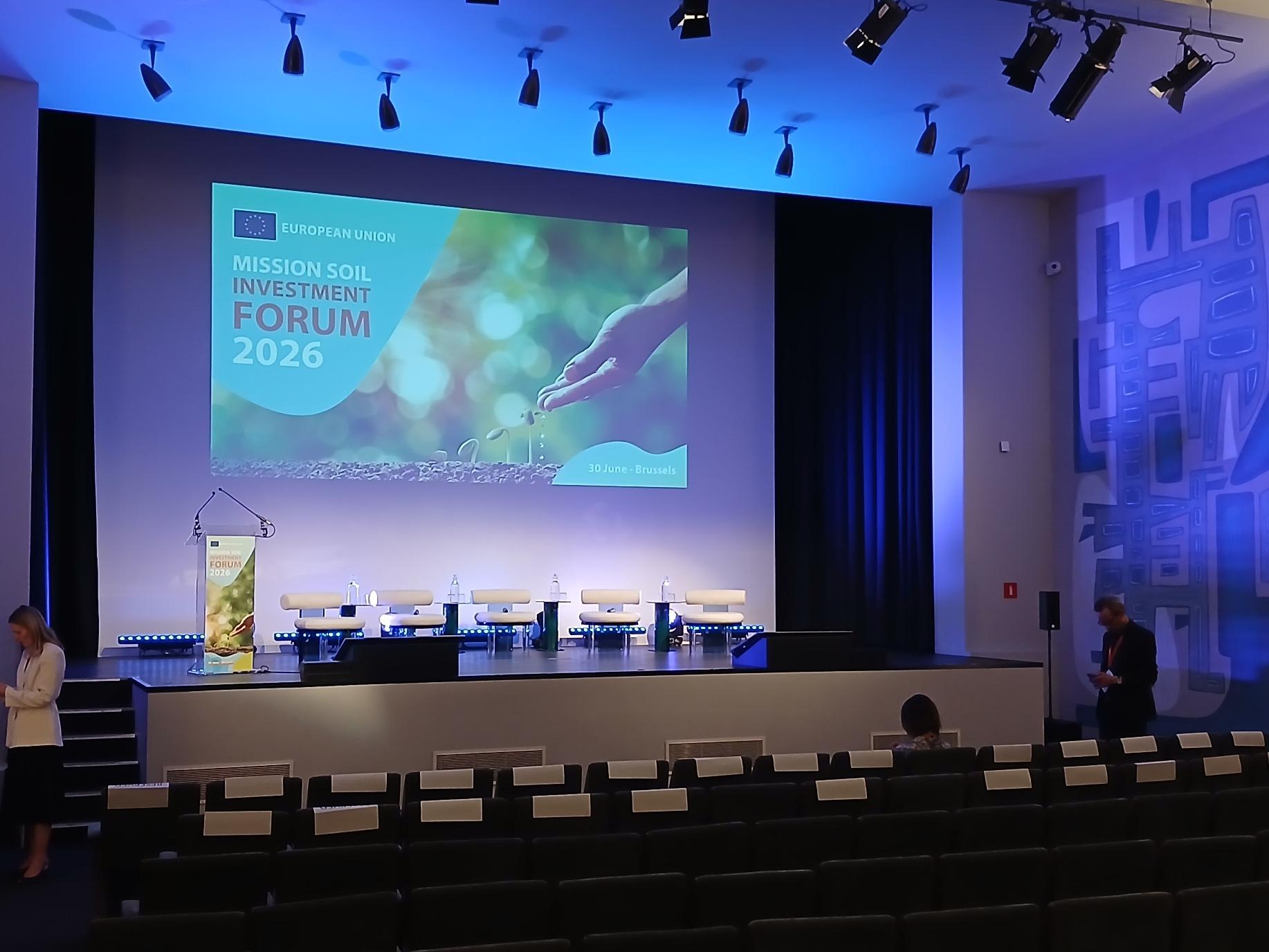
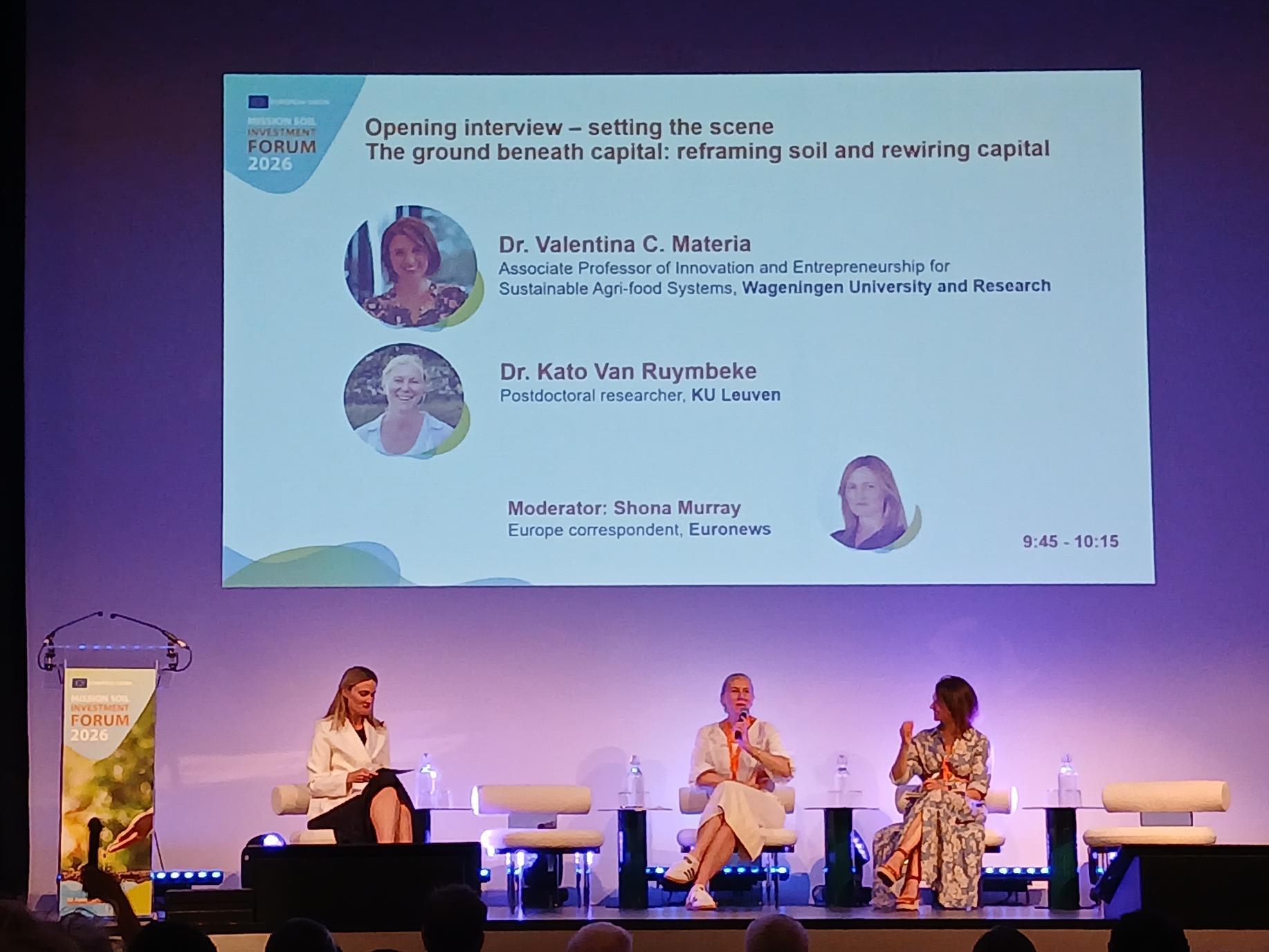
The forum opened with a keynote discussion on redefining the value of soil, moving beyond its traditional role as a productive asset towards recognising its wider environmental, social, and economic contributions. Speakers emphasised that healthy soils provide far more than agricultural productivity, they support biodiversity, climate regulation, water retention, and community resilience. A recurring message throughout the opening session was that future business models should capture these broader societal benefits, acknowledge not only quantitative indicators but also the plural values: the social relationships, knowledge exchange, and community engagement that underpin successful soil management.
The opening discussions also highlighted the importance of addressing “soil literacy”, ensuring that farmers, land managers, businesses, investors, and the wider public better understand the value of healthy soils and the contribution they make to climate resilience and sustainable development. Rather than applying a single business model across different regions, the speakers stressed that locally adapted approaches, developed collaboratively with farmers and communities, are essential for long-term success.
These themes closely align with the objectives of the TRANS-SAHARA project. Through its Living Labs across the Greater North African region, the project adopts a participatory approach that combines scientific research with local knowledge to co-develop integrated Water–Energy–Food–Ecosystems (WEFE) Nexus solutions tailored to local environmental and socio-economic conditions.
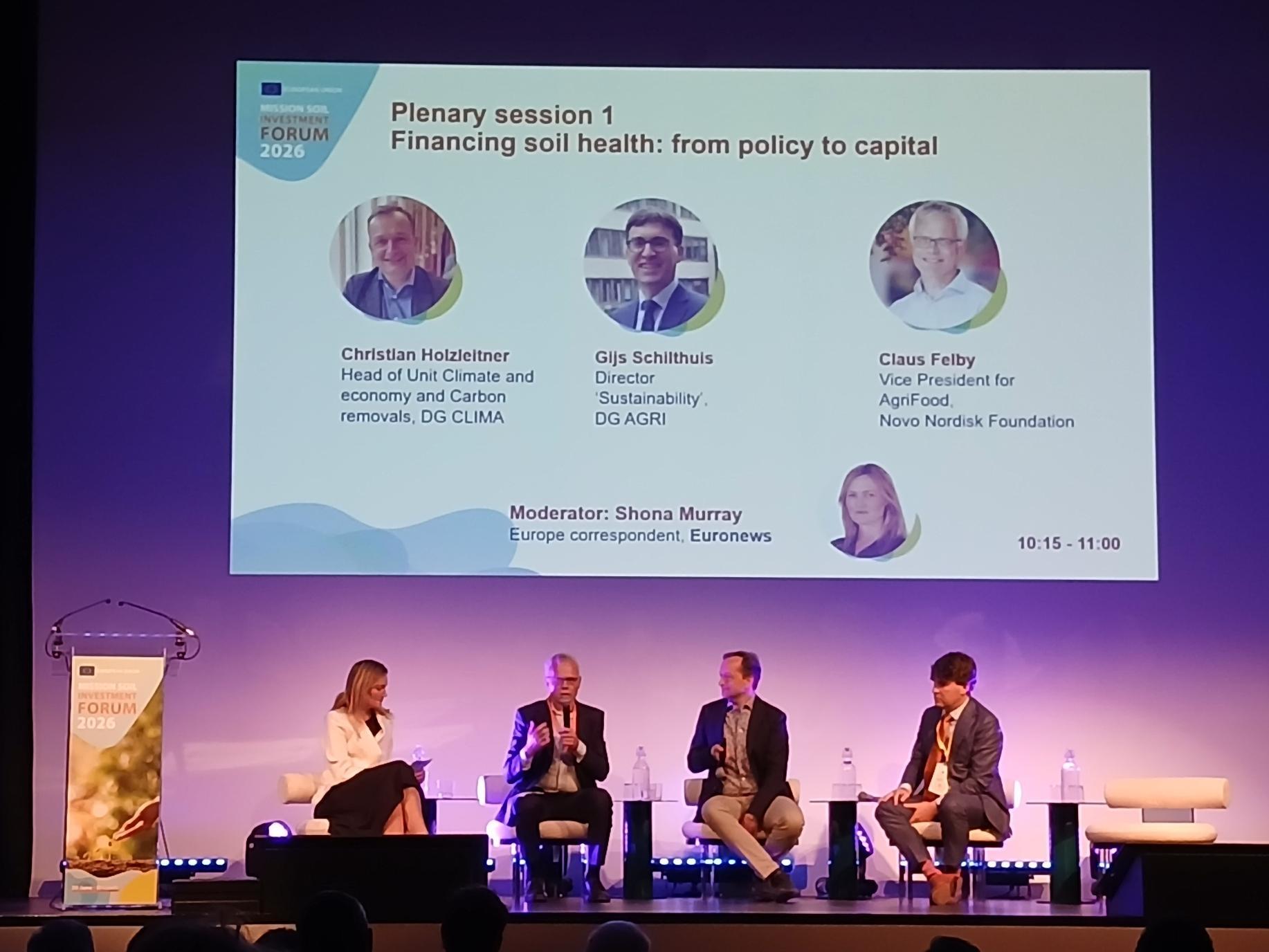
The morning plenary sessions examined how policy frameworks can create favourable conditions for larger-scale investment in soil health. Representatives from the European Commission’s Directorates-General for Climate Action (DG CLIMA) and Agriculture and Rural Development (DG AGRI), together with the Novo Nordisk Foundation, discussed the growing role of carbon farming, nature-based solutions, and emerging financial mechanisms capable of rewarding sustainable land management.
Several speakers highlighted that soil restoration requires long-term investment horizons, with meaningful ecological improvements often taking many years to become visible. Participants emphasised that future financing mechanisms must create benefits for both farmers and investors while remaining sufficiently simple to encourage widespread adoption. Discussions also explored how blended finance, combining public funding with private investment, can help de-risk innovative approaches during their early stages before transitioning towards commercially viable models.
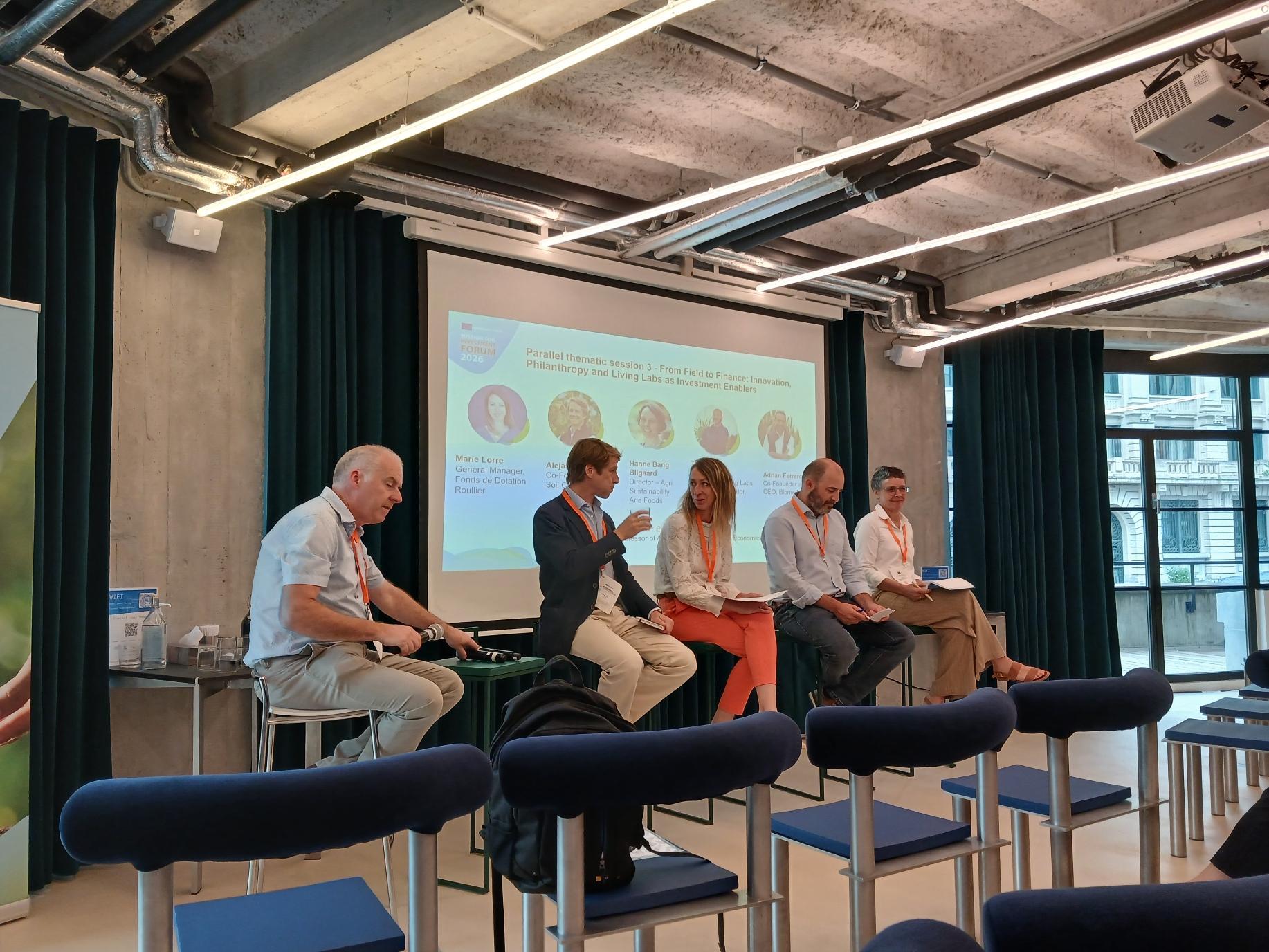
During the afternoon, TRANS-SAHARA attended the parallel session “From Field to Finance: Innovation, Philanthropy and Living Labs as Investment Enablers,” which explored how Living Labs, philanthropic organisations, researchers, and private sector actors can work together to demonstrate and scale innovative soil health solutions.
The session highlighted the importance of Living Labs as more than experimental spaces; they were recognised as innovation ecosystems where scientific research, local knowledge, businesses, and communities collaborate to test, validate, and replicate sustainable land management practices. The speakers stressed that building trust between stakeholders requires time and sustained engagement, often extending well beyond the duration of individual research projects.
The discussions also examined the growing role of data in supporting soil health. While digital technologies, biological monitoring, and remote sensing offer new opportunities to measure environmental improvements, participants recognised that farmers should receive greater value from the information they generate. Rather than viewing data solely as a reporting requirement, several speakers argued that it should be transformed into practical decision-support services that help farmers improve productivity, resilience, and environmental performance.
Another important discussion focused on the long-term sustainability of Living Labs after project funding ends. Participants explored a range of innovative business models, including advisory services, knowledge-sharing networks, certification schemes, regeneration hubs, compost centres, and partnerships with food companies and investors. These approaches aim to create lasting value for local communities while reducing transaction costs and supporting continued collaboration between researchers, practitioners, and businesses.
The final plenary session brought together the key conclusions emerging from each thematic discussion. A recurring message throughout the day was that there is no universal solution for financing soil health. Instead, successful approaches must remain flexible, context-specific, and grounded in local needs. Participants also emphasised the importance of stronger collaboration between public and private sectors, recognising that investment in soil health requires coordinated action across governments, financial institutions, businesses, researchers, and farming communities.
For TRANS-SAHARA, the forum provided valuable insights into how innovative financing mechanisms, participatory business models, and Living Lab approaches can support the long-term implementation of sustainable agroforestry and integrated WEFE Nexus solutions. Many of the discussions echoed the project’s own philosophy that environmental resilience depends not only on scientific innovation but also on strong stakeholder engagement, locally adapted solutions, and partnerships that create lasting value for both people and ecosystems.
The event also provided an excellent opportunity to exchange ideas with representatives from Mission Soil projects, European institutions, investors, and businesses working to accelerate sustainable land management across Europe. As TRANS-SAHARA continues to develop practical solutions through its Living Labs, these exchanges will help strengthen future collaboration and ensure that the project’s work contributes to wider European discussions on soil health, climate resilience, and sustainable land management.