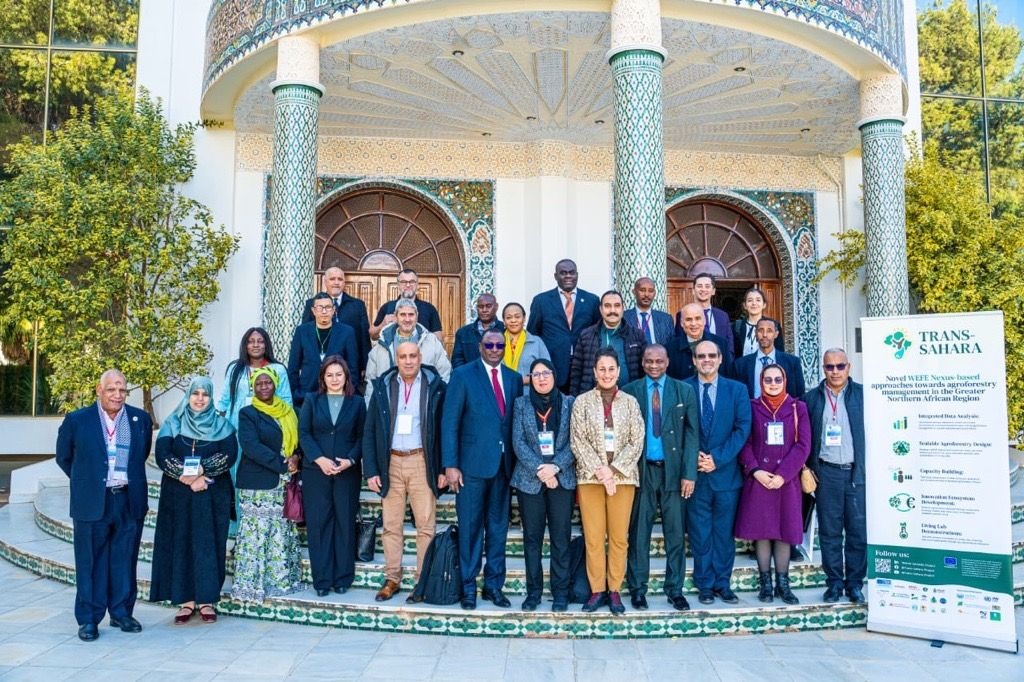
On 1–2 December 2025, the TRANS-SAHARA Project proudly marked a major milestone by hosting its first workshop on Institutionalising the WEFE Nexus during the Second Pan African University International Conference in Tlemcen, Algeria. This event was made possible thanks to the outstanding support and organisation of our partner, PAUWES – Pan African University Institute of Water and Energy Sciences (including Climate Change).
A platform for transformative change
The conference brought together policymakers, researchers, practitioners and international partners to address Africa’s most pressing challenges in sustainability, resource governance and regional integration. Discussions focused on how the Water–Energy–Food–Ecosystems (WEFE) Nexus can move from concept to practice, driving integrated solutions for climate resilience and sustainable development across semi-arid and arid regions.
Keynote spotlight
Our coordinator, Prof. Daphne Gondhalekar (Technical University of Munich), delivered an inspiring keynote titled: “Water Sanitation & Resilience: Operationalising the WEFE Nexus Approach.”
Her presentation explored practical pathways to strengthen resilience by integrating water, energy, food and ecosystems into a holistic governance framework. Prof. Gondhalekar also led the workshop on Institutionalising the WEFE Nexus, guiding participants through actionable strategies for capacity building and policy coherence.
Highlights from the workshop
The sessions featured dynamic exchanges on resource recovery, REUT technologies, and governance challenges, culminating in the drafting of recommendations for Nexus integration across Africa. Distinguished speakers included Mr. Saidou Madougou (African Union Commission), Prof. Jean Koulidiati (Rector, Pan African University), Prof. Abdellatif Zerga (Director, PAUWES), and Prof. Chakib Seladji, alongside Prof. Gondhalekar.
Their insights reinforced the importance of Nexus-based governance for Africa’s resilience and sustainable development, fully aligned with AfCFTA and Agenda 2063.
This event marks a significant step toward institutionalising integrated resource management in Africa.