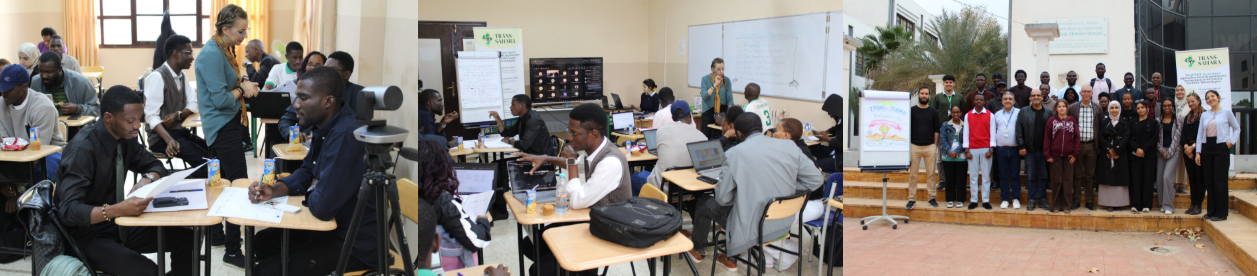
Organised by TRANS-SAHARA’s consortium partner PAUWES – Pan African University Institute of Water and Energy Sciences (including Climate Change), the TRANS-SAHARA WEFE Hackathon supports emerging African innovators in transforming sustainability challenges into entrepreneurial opportunities.
The programme forms part of the project’s wider capacity-building and incubation activities. With 58 participants from 20 African countries taking part in a five-day entrepreneurship training programme designed to help transform innovative ideas into practical business opportunities.
Following a widespread call for innovative ideas promoted through TRANS-SAHARA’s networks, 58 proposals were evaluated by seven reviewers, with 48 successfully qualifying for the next stage.
The selected participants subsequently joined a hybrid entrepreneurship training programme beginning on 15 November 2026, which combined theoretical knowledge, practical exercises and business development tools to strengthen their ideas and prepare for the next stages of the Hackathon.
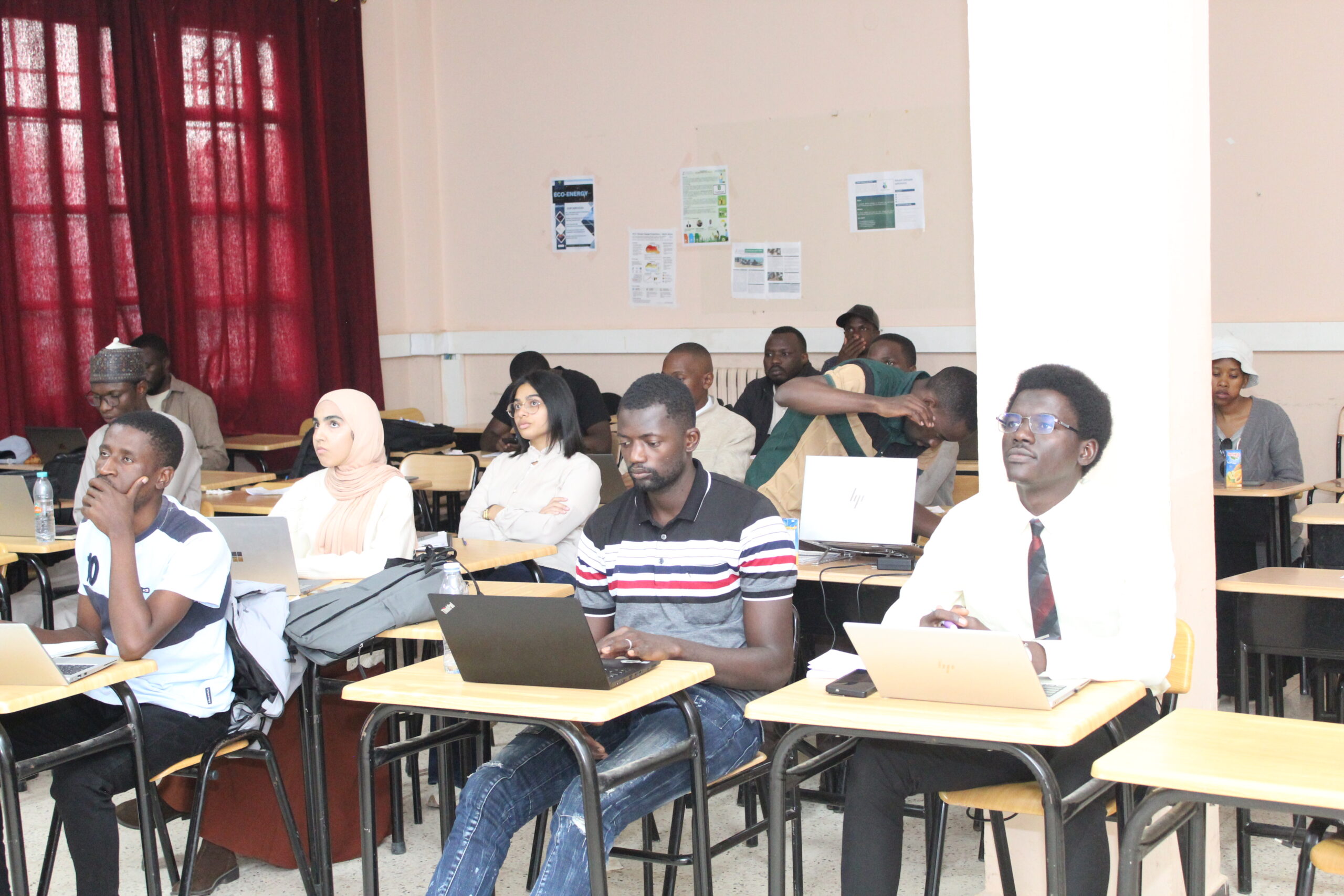
Encouraging Innovation Through the WEFE Nexus
At the heart of the Hackathon is the Water–Energy–Food–Ecosystems (WEFE) Nexus, an integrated approach that recognises the close relationships between water resources, energy systems, food production and ecosystem health. The Hackathon encourages participants to explore these connections and develop innovative business ideas that respond to real-world environmental and socio-economic challenges.
Through the combination of entrepreneurship tools and sustainability-focused problem-solving, the initiative seeks to support the development of locally relevant solutions while strengthening participants’ capacity to translate innovative concepts into practical opportunities.
Five Days of Practical Entrepreneurship Training
The training programme was delivered by the PAUWES research team as part of TRANS-SAHARA’s activities under Work Packages 5 and 7.
Structured around five hybrid sessions, the programme combined in-person and online participation, which enabled participants from all over the region to engage in the training.
The participants were encouraged to develop and refine a business opportunity progressively throughout the programme, applying the knowledge gained during each session to their own ideas.
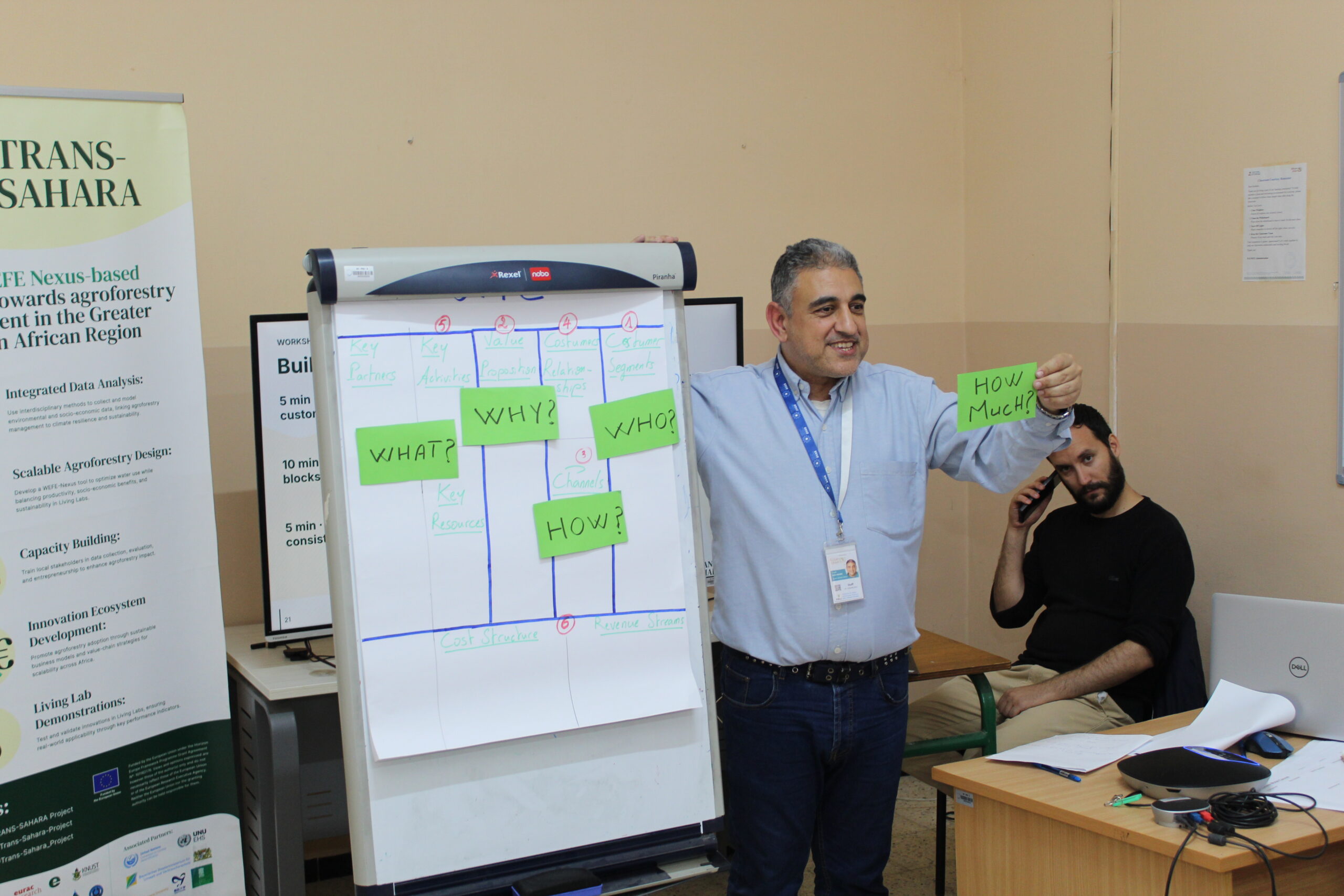
The training covered the following key topics:
- Day 1 – Entrepreneurship Basics and From Problems to Opportunities: Introducing fundamental entrepreneurial concepts and exploring how real-world challenges can be transformed into potential business opportunities.
- Day 2 – Idea Generation and Innovation, and Customers and Value Proposition: Supporting participants in developing innovative ideas, identifying potential customers and understanding the value their proposed solutions could offer.
- Days 3–4 – Business Model Canvas: Guiding participants through the development of structured business models, including the key elements required to assess how their ideas could become viable ventures.
- Day 5 – Pitching and Hackathon Readiness: Preparing participants to communicate their ideas clearly and effectively, while strengthening their readiness for the next stages of the Hackathon.
The training concluded with an open call for participants to submit their Business Model Canvas (BMC) and pitch presentations, marking the next step in the development of their entrepreneurial ideas.
These submissions will provide an opportunity to assess how participants have applied the concepts explored during the training and how their proposed solutions have developed throughout the programme.
Among the submitted ideas, between three and five will have the opportunity to be selected to pitch at the African Startup Conference 2026 in Algiers, Algeria.
Overall, the WEFE Hackathon training represents an important milestone in the development of the TRANS-SAHARA Capacity Building and Incubation Programme. Beyond encouraging the generation of innovative ideas, the programme aims to equip participants with the entrepreneurial knowledge and practical tools needed to assess, develop and communicate potential solutions. The outcomes of the training will also help inform the project’s ongoing capacity-building and incubation activities, supporting the further development of innovative solutions addressing interconnected water, energy, food and ecosystem challenges.
TRANS-SAHARA would like to congratulate all participants on completing this Hackathon and thank our partners in the PAUWES research team for coordinating and delivering the training.
We look forward to following the participants’ progress and sharing further updates as their innovative ideas develop.