
Living Lab Senegal
- Ranérou municipality, Senegal
- Climate: Arid
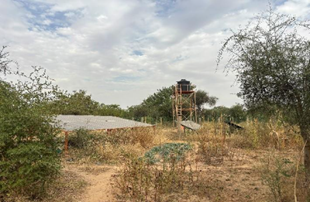
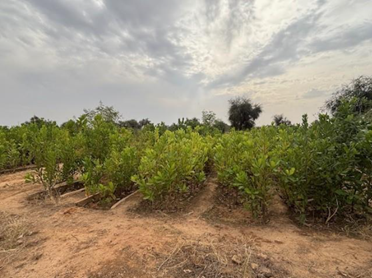
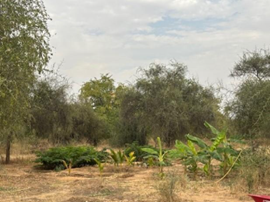
The Senegal Living Lab is a small but strategic pilot site located in the municipality of Ranérou, designed to explore the interactions between water, energy, food, and ecosystems (WEFE) in a semi-arid Sahelian context. It builds upon an existing 3‑hectare agroecological perimeter developed under the AbE (Ecosystem‑based Adaptation) project funded by the GEF through UNDP and IUCN, with planned expansion toward a nearby pond ecosystem.
Details:
- Key Challenge:
- Approach:
- Impact:
• Water scarcity and quality degradation: the Wendou Diabirou pond retains water for only 3–4 months and deteriorates rapidly without regulated management.
• High pressure from livestock: with the pond serving ~3,000 sedentary and transhumant cattle.
• Land degradation and erosion: requiring ecological restoration around the pond and productivity improvements in the perimeter.
• Limited agricultural land: with only 3 ha currently cultivated and high dependence on the solar‑pumped borehole.
• Need for improved water governance: especially around the pond’s shared uses for livestock and agriculture.
• Socio‑economic vulnerability: with women’s groups relying on the perimeter for income and training.
The Living Lab integrates agroecology, renewable energy, and ecosystem restoration through a WEFE Nexus approach.
Water management & natural infrastructure:
• Promote the pond as natural infrastructure for rainfall storage, flood mitigation, and groundwater recharge.
• Experiment with infiltration trenches, vegetated buffer zones, and bank protection to improve water retention and reduce silting.
• Improve regulated use of pond water to extend its availability and quality.
Sustainable food production:
• Extend the agroecological perimeter from 3 ha to 7 ha, linking it directly to pond water and the borehole’s solar pumping system.
• Diversify crops and strengthen agro‑sylvo‑pastoral practices.
• Enhance food security and economic opportunities for women and youth.
Renewable energy use: reinforce the existing solar energy system, enabling:
• Efficient irrigation methods.
• Powering training and community spaces.
• Testing new productive energy uses.
Ecological restoration:
• Reforest and stabilize pond banks using local species.
• Reduce evaporation and sand encroachment.
• Strengthen biodiversity corridors for Sahelian flora and fauna.
Co‑design & learning space:
• Develop the site as a platform for innovation, demonstration, and co‑design with local communities.
• Provide continuous learning and applied research in agroforestry, water management, and restoration practices.
Stakeholder Collaboration: stakeholders include local communities and women’s groups, technical services and municipal authorities, and TRANS‑SAHARA consortium partners.
Impacts from the Senegal Living Lab will be documented as implementation progresses.
Implementation partners:
Image Gallery

Funded by the European Union under the Horizon Europe Framework Programme Grant Agreement Nº: 101182176. Views and opinions expressed are however those of the author(s) only and do not necessarily reflect those of the European Union or of the European Research Executive Agency. Neither the European Union nor the granting authority can be held responsible for them.
Copyright 2025 Trans-Sahara